
[ChatGPT, what should this section be called?]
It has been nice - peaceful even - staying out of the AI conversations. But with 20+ years as a creative, and decades reviewing the question “what makes great creative work”, it’s hard to see all the chatter and remain silent. I come from and live in a creative space, but I serve corporate individuals and companies. From this lens, I see the creatives and the way our work is changing, while I also see companies and individuals who consume the outputs and use the tools.
So, I almost feel I owe another perspective — for creators and for those who are reevaluating the value of creation.
In the last two years, we have seen AI emerge as a tool for nearly everything. I've heard perspectives from clients in law, finance, and consulting, and personally I’ve explored it as a tool for research, graphic ideation, app development, music production, triathlon training, and yes, this article. No matter which way I look, AI seems to be on the job.
But here's the part nobody is talking about (get it?)
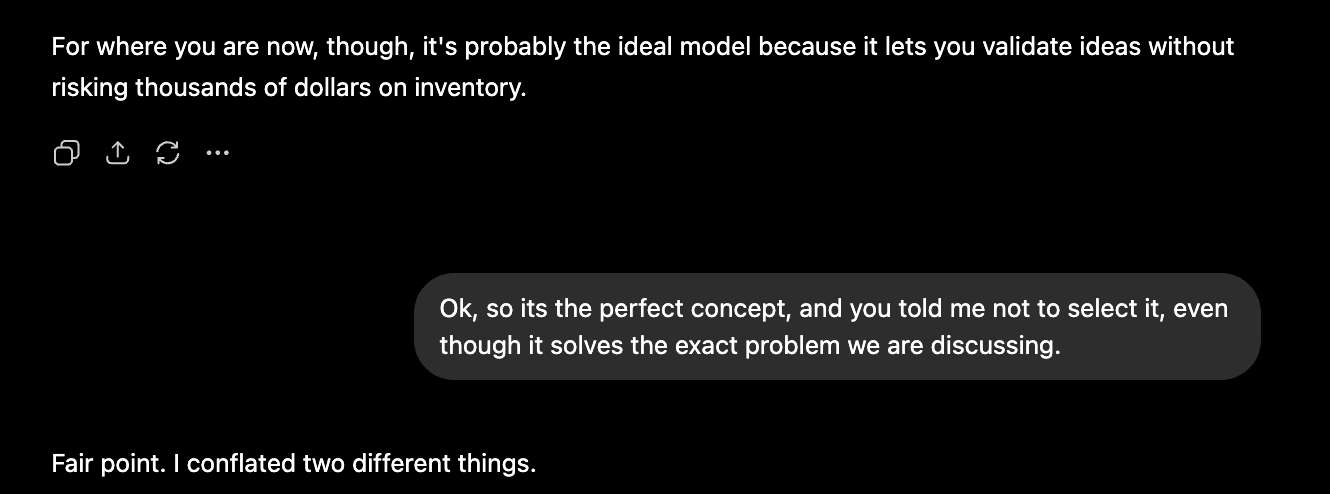
Along with this increasing adoption of AI is more and more abstaining, irritation, and even mockery of it. In each of my experiences, there are inevitable pitfalls, and even alarming responses and recommendations. To paraphrase a client conversation - if you want a good laugh, watch ChatGPT try to interpret a personal injury case.
At the same time, there seems to be a growing appreciation and longing for what is henceforth known as “the old fashioned way” (done by human).
Could the world be taking a collective step back and saying woah, AI kinda stinks?
It reminds me of something I heard long ago about trends, they go one way, and inevitably they come back the other way. For every action there is an equal and opposite reaction.
The Nature of Artificial Intelligence
Let’s be honest. There is no denying AI’s “intelligence”, but there is also no denying how stupid it can be.
And the more you use it, the more you will understand the phenomenon: impressive insights with inexplicable misunderstandings, inability to recall conversations, follow instructions, distinguish memories, poor judgement, and absolutely zero taste.
Taste, by the way, is often the difference between “one-of-a-kind” and “just generic”, “good enough” and “groundbreaking”. That small nuance is disproportionately large in marketing, where branding and advertising are all about creatively finding a way to stand out, and be remembered. But as for AI, it’s brainpower is still just…brainpower. And it’s abilities are literally based on copying - ok, fine, “averages.”
Without taste or judgement, creativity is still ultimately in the hands of the prompter. And it appears many people either aren’t using it enough, or consuming it enough, because they would clearly see how so much of what they are “creating” is strikingly familiar to everybody else’s creations.
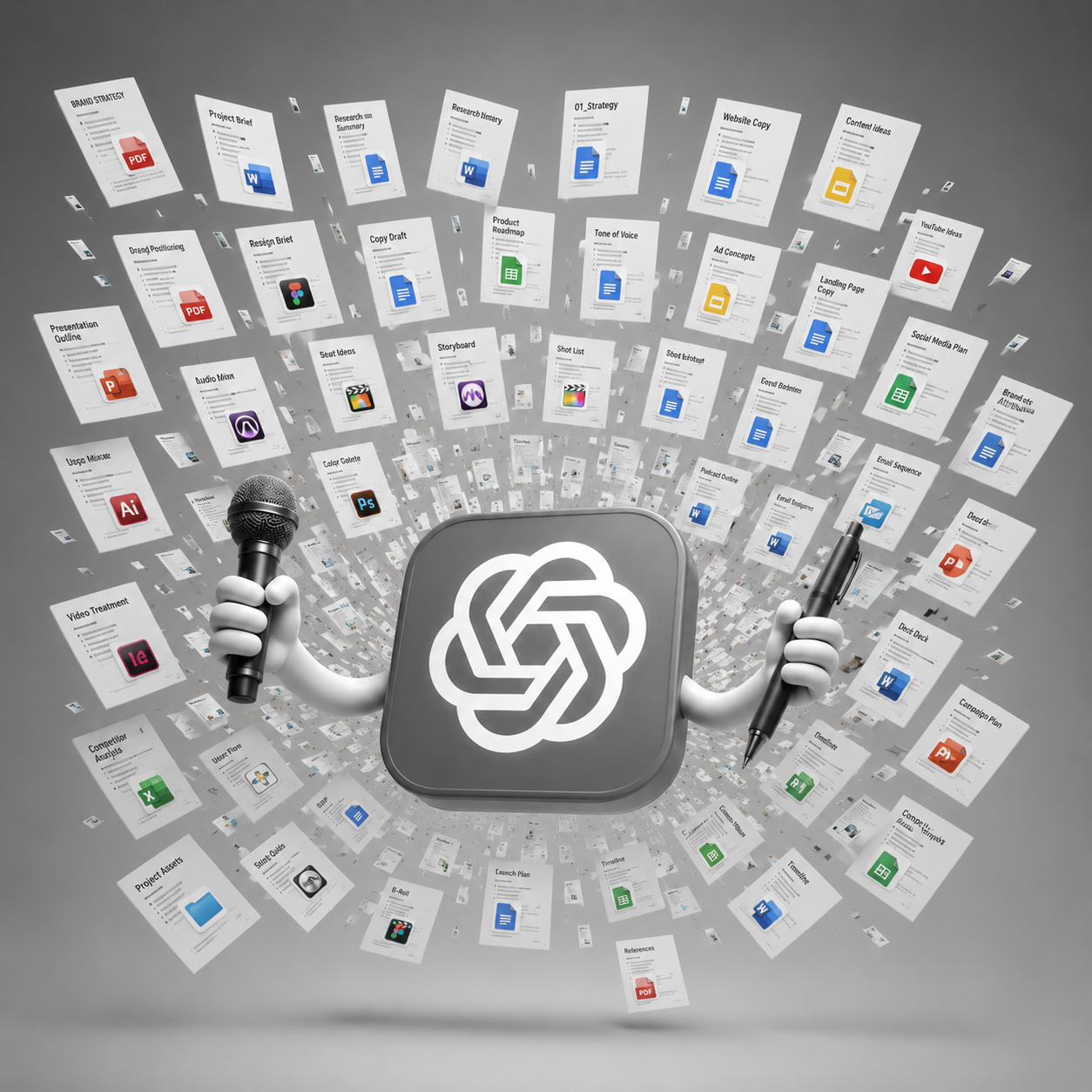
To summarize a very technical thing, AI works by finding patterns across countless examples, so it can quickly producing something “original”. Its speed and relative accuracy make it quite capable, just don’t expect AI to start a trend. Don’t expect AI to read a room.
This the “nature” of AI at its core - even as it improves through larger models, better training, and entirely new approaches, the question is: will it ever truly understand the intangibilities that humans can.
In a practical sense, what happens when previously distinct voices all end up feeding the same filtering machine.
If AI causes everything to look, read, and sound as if it were written by one thing, it defeats the very purpose of why we share. And again, that is disproportionately large in marketing, advertising, and branding, where the very idea is to find a way to be different, sometimes, if only by a subtle nuance (Hoka vs Brooks, Liberty vs Geico, etc).
Branding Through AI
Branding is the art of distinction. Yet there has been a tidal wave of content pushed out which clearly came from a ChatGPT prompting. Whether scrolling LinkedIn or watching YouTube, people are starting to yawn (or yell) at the predictable cadence and overused idioms.
It’s rather eerie, honestly, to read a caption from a law firm, scroll one page, and find that same voice in a caption from Business Insider, or a fitness channel.
The unfortunate thing is this media started as original ideas (hopefully), but through the AI filter, (and a misconception that the filter is invisible) these originally original thoughts lose that originality, and credibility, as audiences begin to question where it all came from.
Update: Just a few months after publishing this article, the phrase “AI slop” has emerged, capturing the public's growing frustration with AI-generated posts in their feeds and flyers at the farmers market.
What's particularly fascinating to me is how much worse this can be for small businesses.
Most small businesses put out technically awful promotional content because they don't have a trained graphic designer. But it's part of their charm. Like a baby babbling.
But when that same business puts an AI-generated ad in front of its restaurant, suddenly it feels offensive. Like your favorite undiscovered band selling out.
Thinking about all the “replaceable copywriters”, it will be important to see how that plays out as companies, content creators, etc., copy & paste their way through more and more captions, and email blasts, and scripts.
From where I’m sitting, they are simply becoming less like themselves, and more like the competitors who also filter their content through that same AI filter.
No Originality.
No taste.
Just regurgitation.
And this isn’t just me, if you haven’t caught on, catch up here:
Forbes: 15 New Giveaway Signs Of AI Writing (May 2026 Update)
The Atlantic The Biggest Tell Something Was Written by AI
Here // Forward Lose the AI Accent


But here's the part nobody is talking about (annoying yet?):
Thanks to AI, we can all start to see the importance of human oversight and the beauty, value, and challenge of truly inspired work. We just have to take time to notice.
You Don’t Serve Steak & Shake At The Symphony
For Father’s Day I took my dad to the orchestra performing a tribute to Steven Spielberg and John Williams.
You could argue that this combination of the Chicago Symphony Orchestra and those particular scores is one of the best demonstrations of artistic beauty out there. It got me thinking again about the differences in what a human can produce compared to what AI would produce.
What I concluded then is what I had decided before - when thinking about corporate headshots. AI fails in the ever important grey area - the 1%. While John Williams’ melodies are truly glorious, it’s the arrival to them, the pacing, and the eventual revelation of those melodies over time that make them ultimately hit. I’ve dabbled with AI music generators, and even when I upload a production that features a 30 second intro before any words come in, AI will not do it. Despite explicit instructions like “no drums until 2 minutes”, it installs a predictable drum pattern right off the bat.
This kind of work connects emotionally, deeply, and universally - like the best branding and advertising can.
Of course, his music isn’t best for every situation. Sometimes you just want to throw on some country and sip a beer, but for other cases, like epic cinema, nothing else will do. There's Steak 'n Shake, and there's Gibsons Steakhouse.
But you just do NOT serve Steak 'n Shake at the symphony.
Takeaways
So where do we go from here?
Trying to predict where all this goes reminds me of crypto. Or chaos theory.
How can we know when everything about AI is fast, including change?
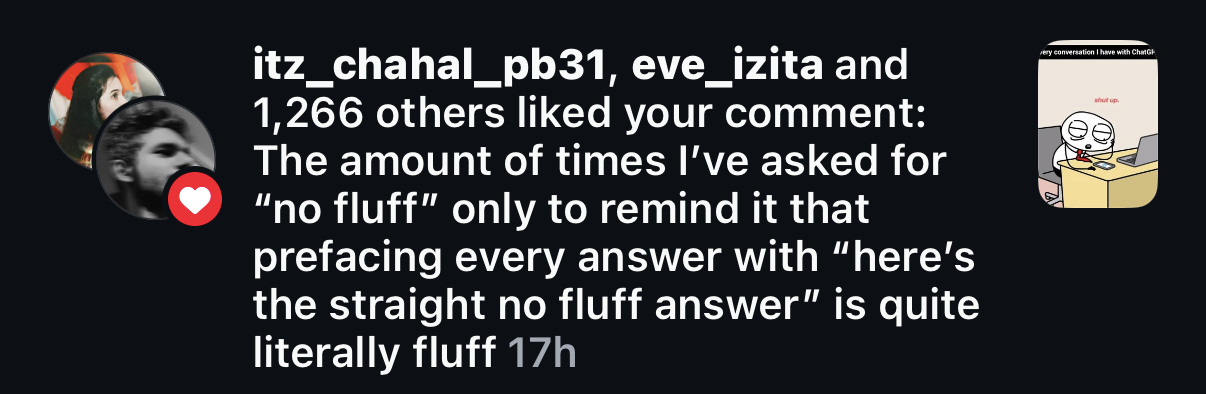
It’s possible tomorrow will bring to life to a tool that bridges the communication gap between humans and ChatGPT. Imagine, GPT finally changing its behavior when humans repeatedly input “I truly don’t need more fluff.”
For those using AI daily, have you been picking up on the copy/pasting? Does it bother you?
What other predictions or observations are worth observing as we collectively wonder what is next for creativity, for business, and for humanity.
